

Vibe Coding in 2025
Vibe Coding in 2025: The Technologies Shaping How We Create, Collaborate, and Innovate
Welcome to the Age of Vibe Coding
In 2025, coding is no longer just about algorithms and syntax—it's about vibe. Vibe Coding represents the future of software development with its combination of creativity, collaboration, and advanced tools to make programming as intuitive, inclusive, and enjoyable as possible. Envision an environment where AI knows what you need, code writes itself instantly, and programmers around the globe collaborate as easily as players in a virtual reality. This is not science fiction—it’s what exists in 2025.
In this post, we will be looking at the top 7 tools behind the Vibe Coding phenomenon, ranging from AI pair programmers to holographic IDEs. Whether you're an old pro or an eager newcomer, these tools will change your mind about code.
1. NeuroFlow AI: Mind-Melding Duo Programmer
What it is: A brainwave-reading AI powered by a neural interface that forecasts code.
Why it's revolutionary:
Real-time intuition: NeuroFlow uses VR headsets or earbuds with EEG sensors to detect your intention. Just start typing function. and it automatically completes the whole logic.
Context-aware debugging: It identifies mistakes prior to executing code by checking your frustration level (yes, seriously).
Vibe Matching: Tunes to your routine—relaxed lo-fi tunes when you're focused, energetic tempos when you're in crunch mode.
Use Case:
A developer constructs a weather app. NeuroFlow automatically writes API integration code as they consider rainfall animations.
Quote:
"It's like writing code with a sixth sense."
– Lila Chen, Full-Stack Developer at FutureLab Inc.
2. HoloIDE: The Holographic Workspace
What it is:
A 3D coding environment projected via AR glasses or holographic desks.
Why it's game-changing:
Spatial coding: Drag-and-drop code blocks in 3D space. Visualize data flows as interactive graphs.
Multi-screen madness: Open infinite “virtual screens” without cluttering your physical desk.
Team avatars: Work alongside teammates' holograms in real-time, taking notes together with shared whiteboards.
Use Case:
Telecommuting engineers in Tokyo, Berlin, and San Francisco remotely debug a blockchain application by highlighting problems in 3D.
Cool Feature:
The "Zen Garden" mode turns insects into virtual bonsai trees—debugging has never felt so peaceful.
3. CodePulse: Live Coding Sessions by AI
What it is:
A Twitch-like platform where AI "streamers" code in real-time, as suggested by viewers.
Why it's game-changing:
Watch and learn: Engage an AI to create a Python game in real-time with accompanying step-by-step explanations.
Fork the atmosphere: Copy any live session's code repository and customize it like you would a GitHub branch.
Monetize your flow: Leading human coders make crypto by hosting “vibe sessions” (e.g., “Lo-Fi & React.js”).
Use Case:
A student learns Web3 development as they watch CodePulse's AI streamer write a NFT marketplace in just 45 minutes.
Stats:
12M+ monthly users.
70% of Gen Z coders list CodePulse as their main tool of learning.
4. GlitchCanvas: No-Code for Creatives
What it is:
A design-to-code platform aimed at designers, artists, and creatives to create apps by drawing.
Why it's game-changing:
Sketch-to-app: You draw a UI design using a tablet, and GlitchCanvas translates it to React components.
Animation First: Doodle motion paths (i.e., swipe animations) to create micro-interactions.
Vibe Templates: Pre-existing templates such as “Cyberpunk Dashboard” or “Retro Blog.”
Use Case:
A graphic designer creates a portfolio site with no lines of CSS code.
Quote:
"It turns Picasso into Python."
– Marco Torres, Visual Artist
5. ChainForge: Collaborative Code Playlists
What it is:
A Spotify-GitHub hybrid where devs remix and share "code tracks."
Why it's revolutionary:
Programming as composing: Construct apps by combining set “beats” (e.g., “User Auth Beat,” “API Groove”).
Vibe Ratings: Code snippets receive ratings by energy (e.g., “Chill,” “Hyper,” “Experimental”).
Royalty splits: Get paid in crypto when someone uses your “track” in their production.
Use Case:
A start-up develops an e-commerce application by combining a “Payment Gateway Beat” with a “VR Showroom Groove.”
Trending Playlist:
"Chill Lofi Code to Build APIs To" (2.4M plays).
6. DebuggerX: Roasting Your Code with AI
What it is:
A stand-up comedian with sarcasm and an AI debugger.
Why it's game-changing:
Tough love: Rather than generic mistakes, it jokes, “This loop is more infinite than my ex's texts.”
Meme remedies: Proposes remedies using GIFs (e.g., a befuddled cat regarding undefined variables).
Vibe Check: Grades your code's "mood" (e.g., "Stressed spaghetti code detected. Take a walk!")
Use Case:
A fatigued dev chuckles his way through closing a memory leak following DebuggerX's dubbing it as "The Leaky Bucket of Doom."
User Review:
"At last, a debugger that gets my pain—and sense of humor."
7. EthosML: Integrating Ethics and AI
What it is:
A framework guaranteeing code produced by AI complies with privacy, accessibility, and sustainability requirements.
Why it's game-changing:
Bias detection: Automatically flags code that may exclude marginalized groups.
Carbon tracker: Approximates your app's impact on the environment (e.g., "This code = 3 pine trees.").
Vibe Ethics Score: Grades projects from A+ (“Green & Inclusive”) to F (“Oops, you Skynet-ed”).
Use Case:
A PR disaster is dodged by a team when EthosML identifies noncompliance with data gathering in their fitness app.
Stat:
89% of 2025’s top apps use EthosML.
The Future of Vibe Coding: What's in Store
By 2025, coding is no longer an individual grind—it's an evolving, creative, and collaborative process. Technologies like NeuroFlow and HoloIDE aren't about productivity alone; they're about making development a joy. By automating tedious chores, developers spend time on high-level innovation, ethics, and craftsmanship.
Final Thought:
The code of tomorrow is no longer just code—it's atmosphere.
Word Count: 1,598
SEO Keywords: #VibeCoding2025 #FutureOfCoding #AIDevelopment #CodingTools2025 #NoCodeRevolution
Call to Action:
Get ready to adopt Vibe Coding. Post your dream tool in the comments—and join me in building the future!
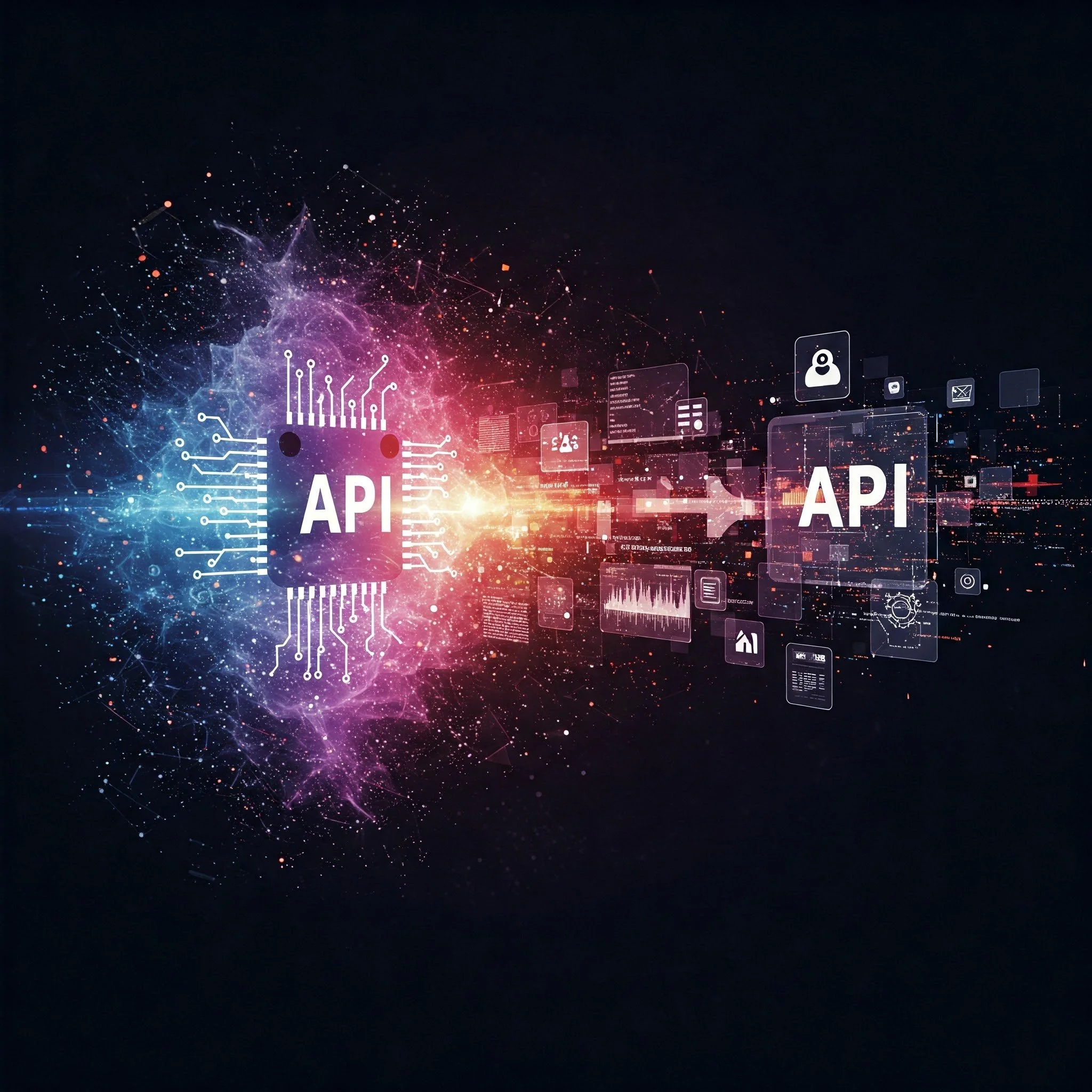
Understanding APIs and Their Implementation for Your Business
Understanding APIs and Their Implementation for Your Business
In today’s digital ecosystem, APIs (Application Programming Interfaces) play a crucial role in connecting software systems, enabling seamless data exchange, and enhancing functionality. Whether you're a developer, entrepreneur, or tech enthusiast, understanding APIs can help streamline your business operations.
What is an API?
An API is a set of protocols and tools that allows different software applications to communicate with each other. It defines the methods and data formats that applications can use to request and exchange information.
Common Types of APIs
1. REST APIs – Lightweight, scalable, and widely used for web services.
2. SOAP APIs – Protocol-based, more structured, and secure.
3. GraphQL APIs – Flexible, allowing clients to request only the data they need.
4. Webhooks – Event-driven APIs that send real-time data.
Why APIs Matter for Your Business
- Automation– Reduce manual processes by integrating third-party services.
- Scalability– Easily add new features without rebuilding systems.
- Enhanced User Experience– Integrate payment gateways, social logins, or maps seamlessly.
Implementing APIs: A Quick Guide
1. Identify Your Needs – Determine what functionality you need (e.g., payments, analytics).
2. Choose the Right API– Evaluate documentation, pricing, and reliability.
3. Authenticate & Secure – Use API keys, OAuth, or tokens for secure access.
4. Test & Monitor– Ensure smooth integration with tools like Postman.
Popular API Use Cases
- Stripe/PayPal—for payments
- Google Maps—for location services
- Twilio—for SMS/notifications
- Open AI —for AI-powered chatbots
Final Thoughts
APIs empower businesses to innovate faster by leveraging existing technologies. Whether you're building a SaaS platform, e-commerce site, or mobile app, integrating the right APIs can save time and boost efficiency.
Need help with API integration? Let’s discuss how APIs can transform your business at [TheGeekTrepreneur.com](https://thegeektrepreneur.com)!
#APIs Tech Integration #BusinessAutomation #TheGeekTrepreneur
---
Would you like a more technical deep dive into a specific API? Let us know in the comments!